Agents Talking to Agents: The Future of Email Marketing
The next generation of email isn't human-to-human. It's agent-to-agent.
By Keith Eddleman
Here's a question that will define the next decade of business communication: What happens when the person reading your email isn't a person?
Right now, most cold emails land in a human inbox. A human reads them (or doesn't). A human decides to reply (or doesn't). The entire outbound playbook is built around human psychology — subject lines that trigger curiosity, opening hooks that build rapport, CTAs that reduce friction.
But that's changing. Fast.
The Rise of Agent Inboxes
AI agents are already managing inboxes. They classify incoming email. They draft responses. They schedule meetings. They flag what's important and archive what isn't.
Google's Gemini reads your email. Apple Intelligence summarizes your inbox. Microsoft Copilot drafts your replies. These aren't future features — they're shipping now.
The logical endpoint: your prospect's AI agent will read your email before your prospect does. And that agent will decide whether to surface it, respond to it, or delete it.
What This Means for Outbound
If an AI agent is the first reader of your cold email, the rules change:
- Clickbait subject lines fail. An AI doesn't feel curiosity. It evaluates relevance.
- Manipulation tactics fail. False urgency, artificial scarcity, social proof tricks — an AI sees through all of it.
- Value wins. An agent surfaces emails that are genuinely relevant to its human. Clear value proposition, specific to the recipient, honest about what you're offering.
- Structured data wins. Emails that contain clear, parseable information (pricing, capabilities, integration points) are easier for an agent to evaluate and summarize.
Agent-to-Agent Communication
The next step beyond agent-filtered inboxes is agent-to-agent communication. Your sales agent talks directly to your prospect's assistant agent.
This is already happening through protocols like A2A (Agent-to-Agent) from Google and MCP (Model Context Protocol) from Anthropic. These enable AI agents to discover each other's capabilities, negotiate, and transact — without humans in the loop.
Imagine: your Emailnado fleet agent sends a structured capability description to a prospect's AI assistant. The assistant evaluates it against the prospect's current needs, checks the calendar, and books a meeting — all autonomously.
Preparing for the Agent Era
Businesses that prepare now will have an enormous advantage:
1. Build for agents, not just humans. Your outbound emails should be readable by both. Clear structure, honest claims, specific value.
2. Expose your capabilities programmatically. Agent cards, API endpoints, structured data — make it easy for other agents to understand what you do.
3. Deploy your own agents. Don't wait for agents to come to you. Deploy autonomous outbound agents that can communicate with both humans and other agents.
4. Test at scale. With fleet orchestration, you can test 64 different approaches to agent-readable messaging simultaneously and find what works.
The Bottom Line
Email marketing is shifting from human-to-human to agent-to-agent. The companies that deploy autonomous sales agents now — agents that can communicate with both humans and AI — will own the next generation of outbound. The ones that don't will wonder why their open rates keep dropping.
Frequently Asked Questions
What is agent-to-agent email communication?
Agent-to-agent communication is when AI agents on both sides of an email exchange interact autonomously — your sales agent sends outreach, and the prospect's AI assistant reads, evaluates, and potentially responds or books a meeting without human intervention.
What protocols enable agent-to-agent communication?
Google's A2A (Agent-to-Agent) protocol and Anthropic's MCP (Model Context Protocol) are the leading standards. They enable AI agents to discover capabilities, negotiate, and transact autonomously.
Will AI agents replace human email readers?
Not replace — but filter. AI agents will increasingly be the first reader of incoming email, deciding what surfaces to the human and what gets handled autonomously. Outbound that isn't relevant or honest will never reach the human.
How should outbound email change for an agent-first world?
Focus on genuine relevance, clear value propositions, structured information, and honesty. Manipulation tactics that work on humans (false urgency, clickbait) fail against AI agents that evaluate based on relevance, not emotion.
What is fleet orchestration in the context of agent-to-agent email?
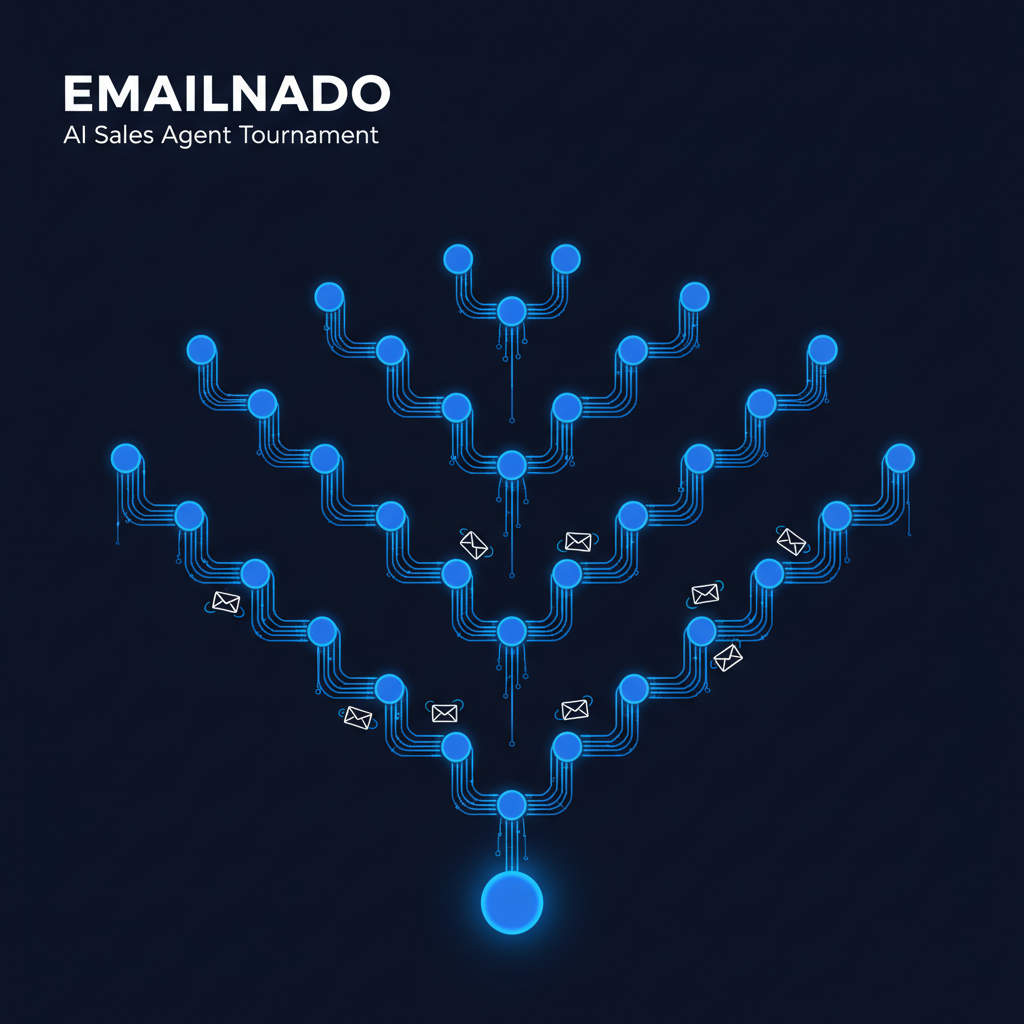
Fleet orchestration deploys 64 autonomous agents to test different messaging approaches — including agent-optimized formats — through tournament bracket elimination. It finds the approach that works for both human and AI readers.
Can my sales agents communicate with a prospect's AI assistant?
Emailnado is built on Essentialist.io, which supports A2A and MCP protocols. Agents can expose structured capability descriptions that other AI systems can discover and evaluate autonomously.
When will agent-to-agent email become mainstream?
It's already starting. Google Gemini, Apple Intelligence, and Microsoft Copilot are processing inbound email today. Full agent-to-agent commerce over email is likely within 12-18 months for enterprise communication.